Every office, team, and extended family in Indian Trail eventually faces the same assignment: feed nine people from a diner menu, on a weekday, without turning lunch into a logistics exercise. Diner food is actually ideal for groups. The menu is broad, the plates are fast, and the kitchen is built for volume. The failures almost never come from the food. They come from how the order is placed.
Here is the system that groups who do this weekly use, whether the food is eaten at a big table or picked up in bags.
Why diner menus suit groups
A group order stresses a kitchen in two ways: variety and timing. Diner menus solve variety by construction, since most items are recombinations of the same ingredients, so nine different plates rarely mean nine different preparations. Timing is solved by the grill. Breakfast plates, sandwiches, and grilled items all finish in a narrow window, so a table's food lands together instead of in waves.
The weak point is fried food. The fryer has a fixed capacity, and nine fried orders at once queue up. Smart group orders spread the load: some grill items, some salads and cold plates, one or two fried plates rather than nine.
The checklist that prevents chaos
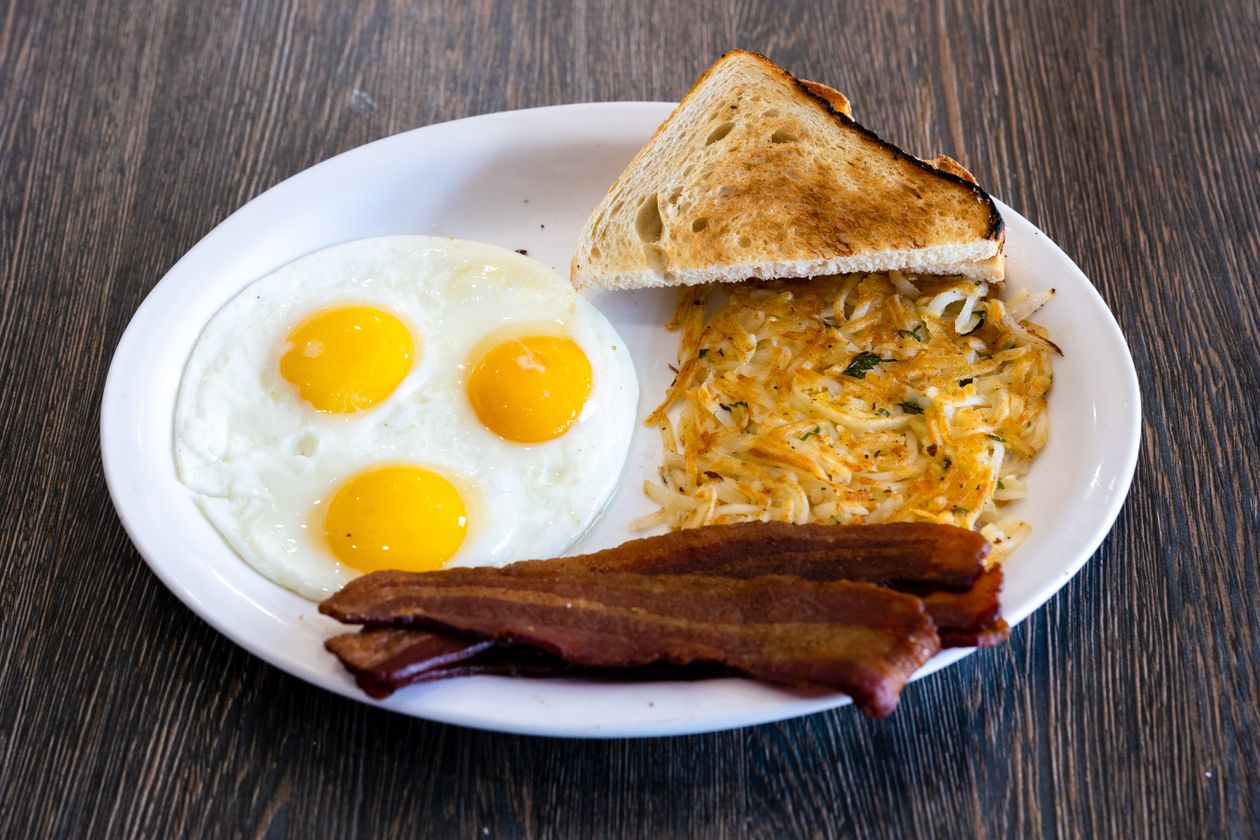
- Count heads and note the egg orders in advance. Eggs are the detail most likely to be forgotten.
- Group the order by plate, not by person, so the kitchen can fire items in batches.
- Put one shared item in the middle: a big salad or a plate of pancakes for the table smooths over mixed appetites.
- Name a single caller. One voice ordering for the group prevents duplicates and contradictions.
- Ask for the check split before the food lands, not after. Servers plan for it easily when they know early.
- For takeout, add five minutes to whatever time you are quoted during the lunch rush. The fryer queue is real.
Eating in versus picking up
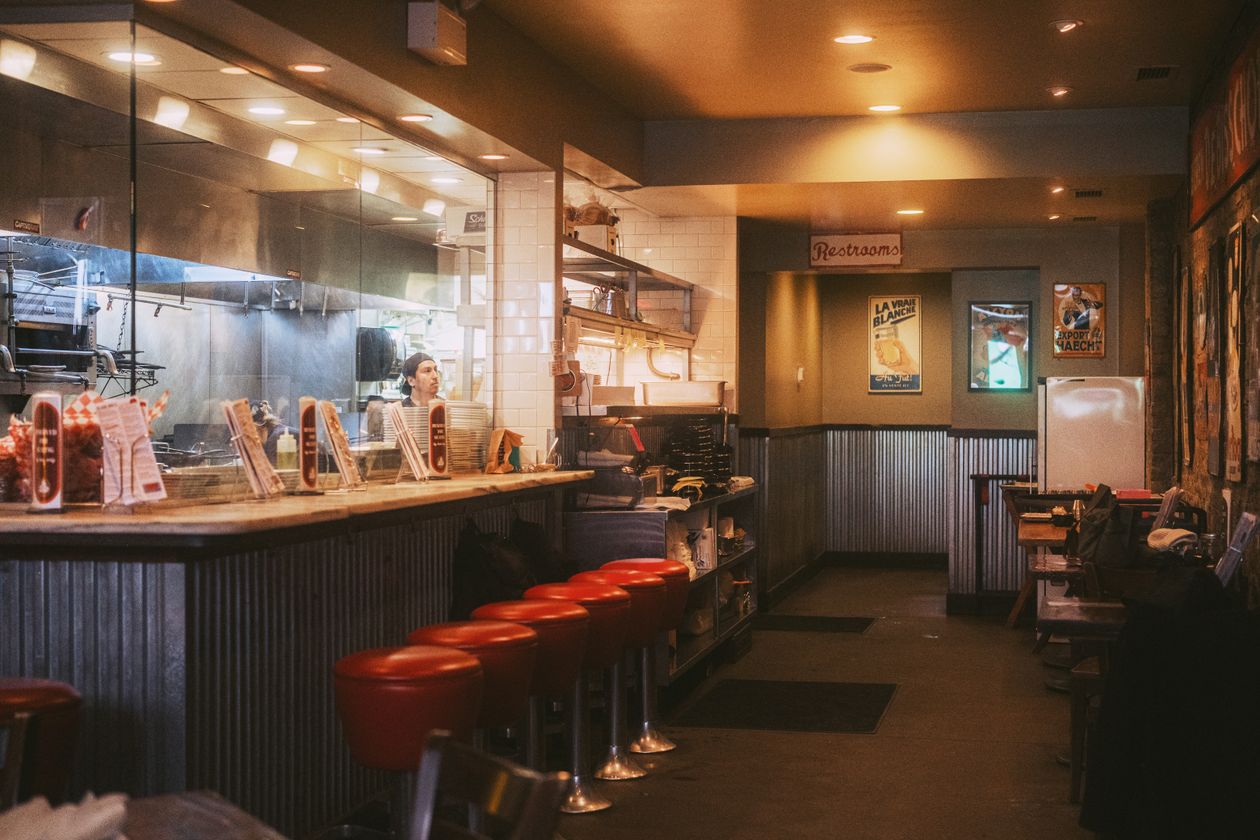
For a group eating in, the main decision is one check or many, and it should be made before anyone orders. Diners handle split checks routinely, but the server builds the tickets differently from the start when they know. For pickup, order by phone ahead of the rush rather than in the middle of it, and send one person with the full list written down. The person at the counter confirming bags against a list is the difference between a smooth pickup and a second trip for the missing slaw.
Finally, order one more plate than you think you need if the group includes teenagers or anyone coming off a morning of physical work. Diner portions are generous, but group appetites are the most consistently underestimated number in food planning. An extra breakfast plate in the middle of the table has never once been a mistake.
The office order and the team order are cousins
Everything above doubles for the two group orders diners see most: the office lunch and the youth sports team descending after a game. Office orders succeed on labeling. Ask for each plate marked with a name on the box or ticket, because the conference room distribution problem has ended more lunches than any kitchen error. Team orders succeed on the opposite principle: nobody's name matters, volume does. A stack of burgers, tenders, and fries ordered as shared trays feeds twenty kids faster and happier than twenty individual negotiations at the counter.
Both orders benefit from a phone call before the rush rather than during it. A kitchen warned at eleven that twenty plates are coming at noon will stage ingredients, staff the fryer, and have the ticket sequence planned. The same order arriving unannounced at twelve fifteen goes into the same queue as everyone else's lunch. Diners reward regulars, and the surest way to become a group regular is to be the group that calls ahead and orders clearly. Within a month, the kitchen will know your board meeting days better than your own calendar does.
Common questions
What is the best way to order diner food for a group?
Collect the full order in advance, group it by plate type, and have one person place it. Decide on split checks before ordering if you are eating in.
Why do big fried orders take longer?
Fryers cook in batches with fixed capacity. Nine fried plates queue in a way nine grill plates do not, so mixing in grill and cold items keeps a group order moving.
Should a group order extra food?
Usually one extra plate is cheap insurance. Group appetites run larger than estimates, and diner food reheats or shares easily.
Photos in this guide are representative stock images.
← All guides from Johnny K's Restaurant← Back to Johnny K's Restaurant