Diners attract myths the way flat-tops attract seasoning. Some come from movies, some from one bad experience in another state in 1998, and some from a basic misunderstanding of how a small kitchen turns out that much food that fast. Indian Trail regulars know most of them are wrong, but the myths persist because they sound plausible.
Here are the five that come up most often, sorted against how a diner kitchen actually runs.
The myths, one at a time
| Myth | What is actually true |
|---|---|
| Diner food is all deep-fried | Most of a diner menu is grilled, griddled, or cold-built. The fryer handles a minority of plates. |
| A long menu means frozen food | Diner menus are long because items share ingredients. Length alone says nothing about freshness. |
| Breakfast is only fresh in the morning | Eggs and griddle items cook to order at any hour. A noon omelette is made the same way as a 7 AM one. |
| The grill is dirty because it looks dark | A seasoned flat-top is dark by design. Cooks scrape and clean it through the day; the color is seasoning, not neglect. |
| Daily specials are yesterday's leftovers | Specials are batch dishes cooked that morning. Rotation exists so batches sell through fresh, not to disguise old food. |
Take the long menu myth first, because it drives the others. A fine dining kitchen with forty dishes needs forty supply lines. A diner with eighty menu items might run on twenty ingredients, because the items are combinations: the same chicken grilled, fried, sandwiched, and saladed. Judging a diner menu by its length is judging it by the wrong kitchen's rules.
The grill deserves its own paragraph
The dark flat-top bothers people who equate shiny with clean. A grill used all day develops a seasoned surface, the same as a cast iron skillet, and it is scraped between orders and cleaned on a schedule through the shift. Food releases from a seasoned grill better and picks up the faint, savory background flavor that home cooks chase and cannot name. A mirror-polished grill at a working diner would be the actual warning sign: it would mean nobody is cooking on it.
And the specials board
The leftover theory of daily specials gets the economics backwards. Batch dishes like chicken and dumplings or meatloaf are on the board because they sell through in a single lunch service when made fresh that morning. A kitchen trying to move old food does not advertise it on a handwritten board at the front door. The rotation exists for the opposite reason: so that what is cooked today is eaten today.
None of this means every diner is good. It means the common shortcuts for judging one are unreliable. Judge by turnover instead: a dining room full of regulars at 11 AM on a Tuesday is better evidence than menu length, grill color, or a rumor from another decade.
A word about the coffee
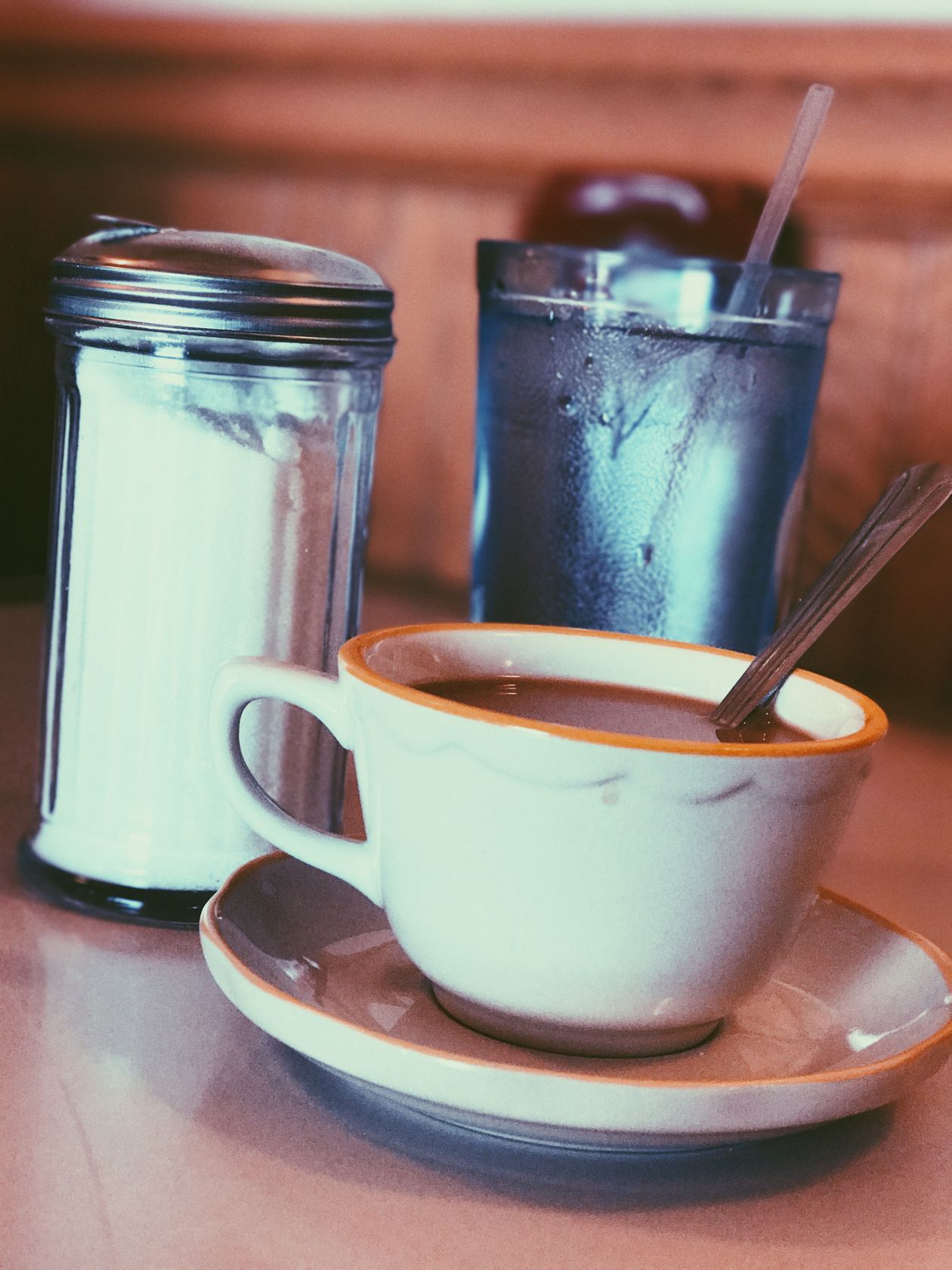
Diner coffee has its own small mythology: that it is a special roast, or that the pot has not been washed since the Ford administration. The truth is more ordinary and more interesting. Diner coffee is brewed in large batches, held hot, and turned over constantly because the dining room drinks it constantly. Freshness in coffee is mostly about turnover, and a pot that never sits is a pot that tastes alive. The strength people notice is a deliberate choice: coffee brewed to stand up to cream, sugar, eggs, and sausage gravy is brewed bolder than coffee meant to be sipped black and contemplated.
The seasoned pot story, though, contains one true kernel. Equipment that is used constantly and cleaned on schedule behaves predictably, and a good diner's coffee tastes the same on a rainy Thursday as on a Saturday rush because the routine never changes. That consistency is what regulars are actually loyal to. They are not tasting nostalgia. They are tasting a process that has not drifted in years, which in a restaurant is a harder trick than any single great cup.
Common questions
Is diner food mostly fried?
No. Grilled, griddled, baked, and cold-built items make up most of a typical diner menu. Fried plates are a visible minority, not the foundation.
Why is the diner grill dark?
Seasoning. A flat-top used all day builds a dark, seasoned surface like cast iron. It is scraped between orders and cleaned through the shift.
Are daily specials a way to use up leftovers?
No. Specials are batch dishes cooked fresh that morning and priced to sell through in one service. The daily rotation is what keeps them fresh.
Photos in this guide are representative stock images.
← All guides from Johnny K's Restaurant← Back to Johnny K's Restaurant