Eggs are the cheapest ingredient on the menu and the easiest one to get wrong, because the difference between over easy and over medium is about fifteen seconds and one confident flip. Diner cooks learn a shared shorthand so a ticket can say in two words what a home cook would need a paragraph to describe. If your breakfast eggs keep arriving slightly different from what you pictured, the fix is usually vocabulary, not the kitchen.
This is the plain guide to that vocabulary, plus what is actually happening in the pan, so your next order in Indian Trail lands the way you meant it.
Fried eggs: the over scale
Fried eggs are cooked in a pan or on the flat-top and described by how far the yolk goes. Sunny side up is never flipped: the whites set from below while the yolk stays glossy and runny. The over scale starts with a flip. Over easy means the white is fully set and the yolk still runs when cut. Over medium splits the difference, a yolk that is thick and jammy at the center. Over hard cooks the yolk completely through, which is the right call for a sandwich that has to travel.
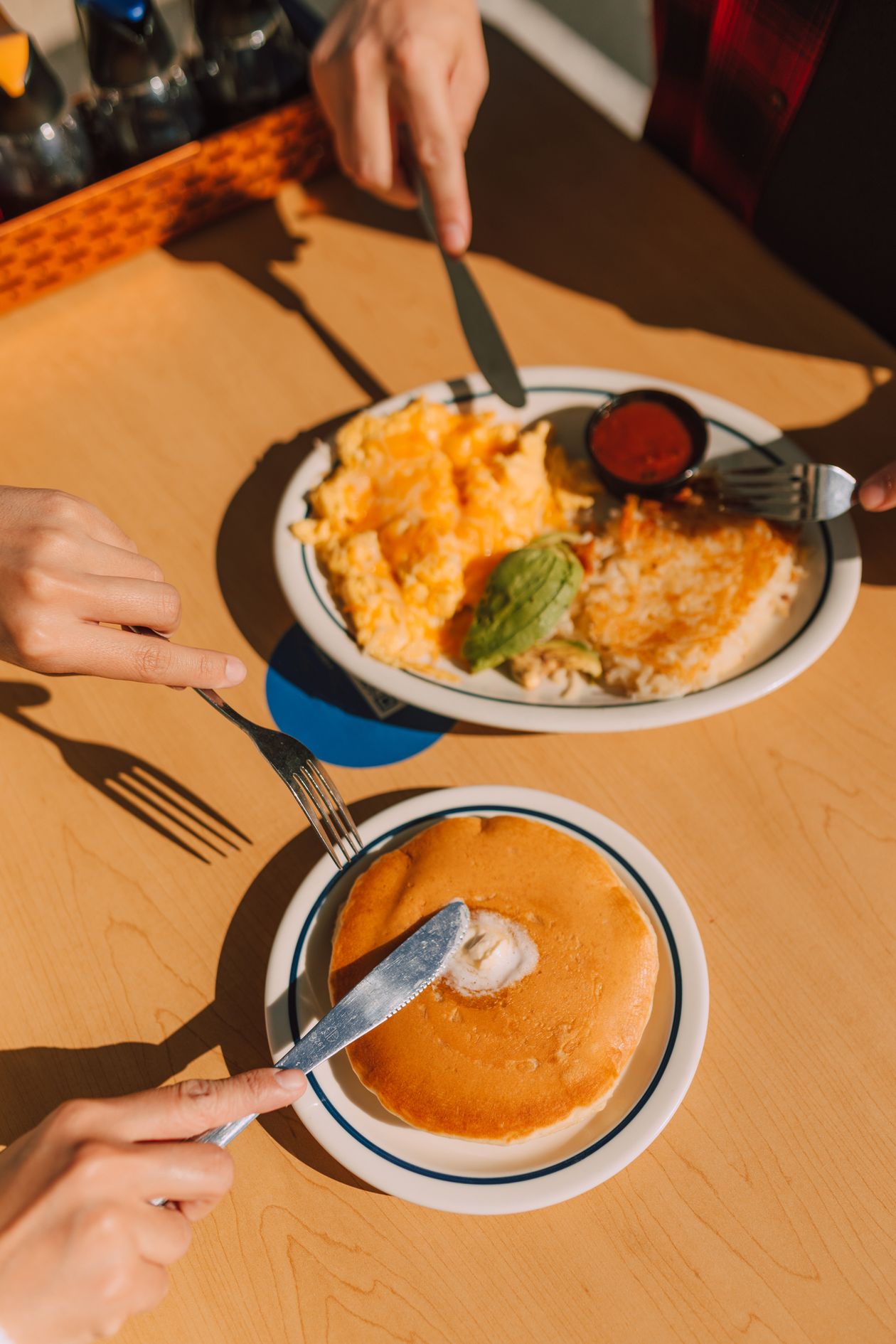
The most common disappointment is ordering over easy and picturing over medium. If a runny yolk on your shirt would ruin your morning, order medium. Cooks respect the honest order far more than the returned plate.
Scrambled: soft versus hard is about water
Scrambled eggs are beaten eggs stirred as they set, and the soft-versus-hard question is really about moisture. Soft scrambled eggs come off the heat while the curds are still glossy, and they finish setting on the warm plate. Hard scrambled eggs stay until they are fully set and drier, which makes them sturdier for to-go boxes and buffet lines. Neither is wrong. Soft eggs eaten ten minutes later in a car, though, will have wept into the toast, so match the style to where you will actually eat.
| Order | What you get | Best for |
|---|---|---|
| Sunny side up | Whites set, yolk fully runny, never flipped | Dipping toast, hash brown topping |
| Over easy | Flipped once, yolk runny, white fully set | Breakfast plates, sandwiches |
| Over medium | Flipped, yolk partly set and jammy | People who want richness without the spill |
| Over hard | Flipped, yolk cooked through | Egg sandwiches, taking breakfast to go |
| Scrambled soft | Curds large and glossy, just set | Eating right away at the table |
| Scrambled hard | Fully set, drier, holds heat | To-go orders and slow eaters |
Omelettes: folded, filled, and cooked through
A diner omelette is typically three eggs, whisked, set in a pan or on the grill, filled, and folded. The Western is the reference build: ham, peppers, and onions. Ham and cheese is the other anchor. Two things worth specifying: whether you want the vegetables cooked into the eggs or kept crisp, and whether you want cheese inside, on top, or both. Left unsaid, the kitchen follows its house standard, which regulars already know and first-timers learn by the second visit.
One last note on timing. Eggs are the fastest-cooking item in the kitchen and the fastest to overcook while waiting. That is why a good diner fires the eggs last, after the hash browns and meat are already on the plate. If your eggs arrive perfect and everything else is hot, you are watching a line cook who has the sequence down, and it is worth appreciating quietly with a good tip.
Two small requests that change the plate
Beyond the style words, two requests give you outsized control over a diner egg plate. The first is hash brown doneness. Hash browns ride the grill longer than anything else on the plate, and cooks default to a middle crispness that satisfies most people. If you like them shattered-crisp or barely golden, say it with the order. The second is toast timing. In a well run kitchen toast drops so it lands as the eggs are plated, but during a rush it can sit. Asking for toast with the plate, rather than ahead, keeps it hot for the yolk work it was born for.
Poached eggs deserve a footnote. Many diners will poach on request even when the menu leads with fried and scrambled, usually for eggs Benedict or a lighter plate. Poaching takes a few extra minutes and a separate pot, so it is a kindness to order it when the kitchen is not at its absolute peak, and to accept soft or medium as the two honest options. Firm poached eggs are a contradiction the cook will resolve in the direction of rubber.
Common questions
What is the difference between over easy and over medium?
Both are flipped eggs. Over easy keeps the yolk fully runny, while over medium cooks it to a thick, jammy center that does not spill when cut.
How many eggs are in a diner omelette?
Typically three. That size folds well, holds fillings, and matches the portion of hash browns and toast that usually comes with it.
Why do my scrambled eggs get watery in a to-go box?
Soft scrambled eggs keep releasing steam and moisture as they sit. For takeout, order them scrambled hard so they stay set on the drive home.
Photos in this guide are representative stock images.
← All guides from Johnny K's Restaurant← Back to Johnny K's Restaurant